
It’s spring and planting has begun! Cool weather crops are growing, and summer crops are coming up soon. A lot of gardeners are wondering what and when to plant. It’s important to be aware of the right times to plant for a full harvest!
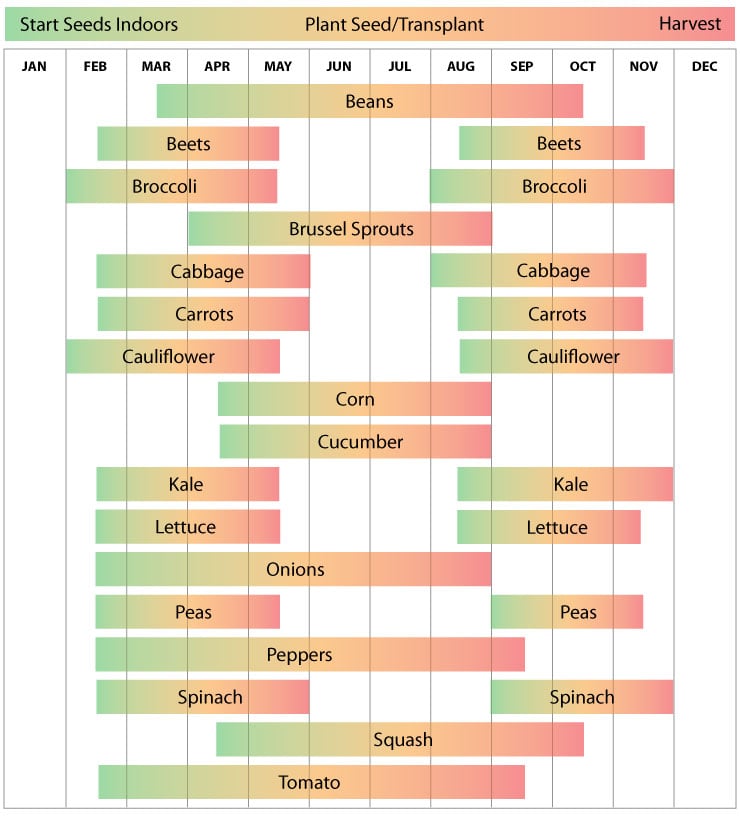
Dallas is in the USDA zone 8a, which describes the climate and growing season available. Our last average frost date was March 15th, meaning another freeze is unlikely, and planting is now in full swing.
The term ‘cool weather plant’ usually refers to plants that grow best in spring or fall. Many of these can be planted before the last frost date and can grow after the first frost date, so these are useful for having a near year round growing season. A lot of these plants will die in the summer heat. Examples include leafy greens (kale, spinach, lettuce, etc.), peas, and beets.
Hot weather plants are those that are most productive in hot weather. While they still need to be watered, they fair better than cool weather plants in dry soil. Hot weather plants include those that are planted early in the year, but that are continuing to grow and produce through out the summer. These include cucumbers, squash, and brussel sprouts. A few examples of those that can be planted in spring and grow throughout summer include peppers, tomatoes, and onions.
In general, you can learn when to plant something by looking at the seed packet. They will usually grow planting types and methods according to zone (so look for zone 8!), and describe when the plant should be seeded in relation to the last frost date. For example, in zone 8, tomatoes are usually started inside 3-4 weeks before the last average frost day, and then transplanted outside.
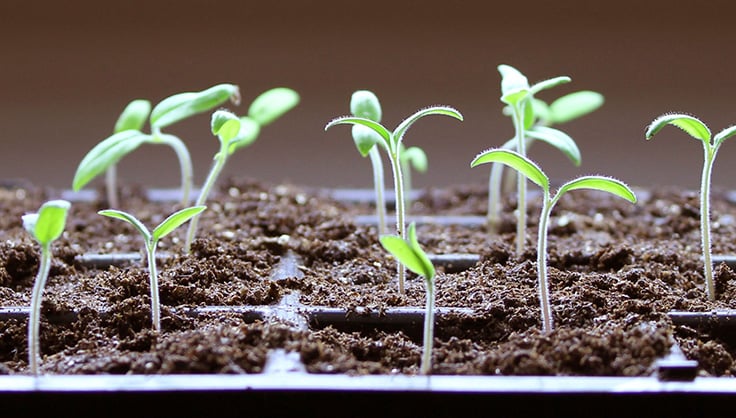
Additionally, check and see how your seeds should be planted. The back of the seed packet often mentions ‘direct sowing’ or starting inside. Seed starting indoors is done through places the seeds in a small cup of dirt, allowing them to be temperature controlled and receive more water. This can be done in a greenhouse or a window sill, anywhere warm with sunlight! Seed starting is commonly done before the last frost date to extend the growing season, and then transplanted outdoors in a larger container. However, some seeds (beans, cucumber) do better directly sowed into the soil.
If you have specific plants in mind, this website provides detailed planting guides for any zip code! It lists out vegetables, fruits, and flowers, and can be a great plant to get information and ideas.
Seeds can be purchased online from places like rareseeds.com or from local places like Calloway’s, Walmart, and Home Depot. Live plants can be purchased from these locations and also Bruce Miller.
If you’ve missed the optimal planting time, don’t worry! Many plants can be planted later for a small harvest, just do your research. Gardening is always an experiment! Keep an eye out for an article about summer plants as the weather warms up.
Happy spring planting!
Written by Caroline Lonneman
 The Greenhouse Blog